What Is Life4Cut? The Korean 4-Cut Photo Strip Trend Explained
22/09/2026 · 5 min
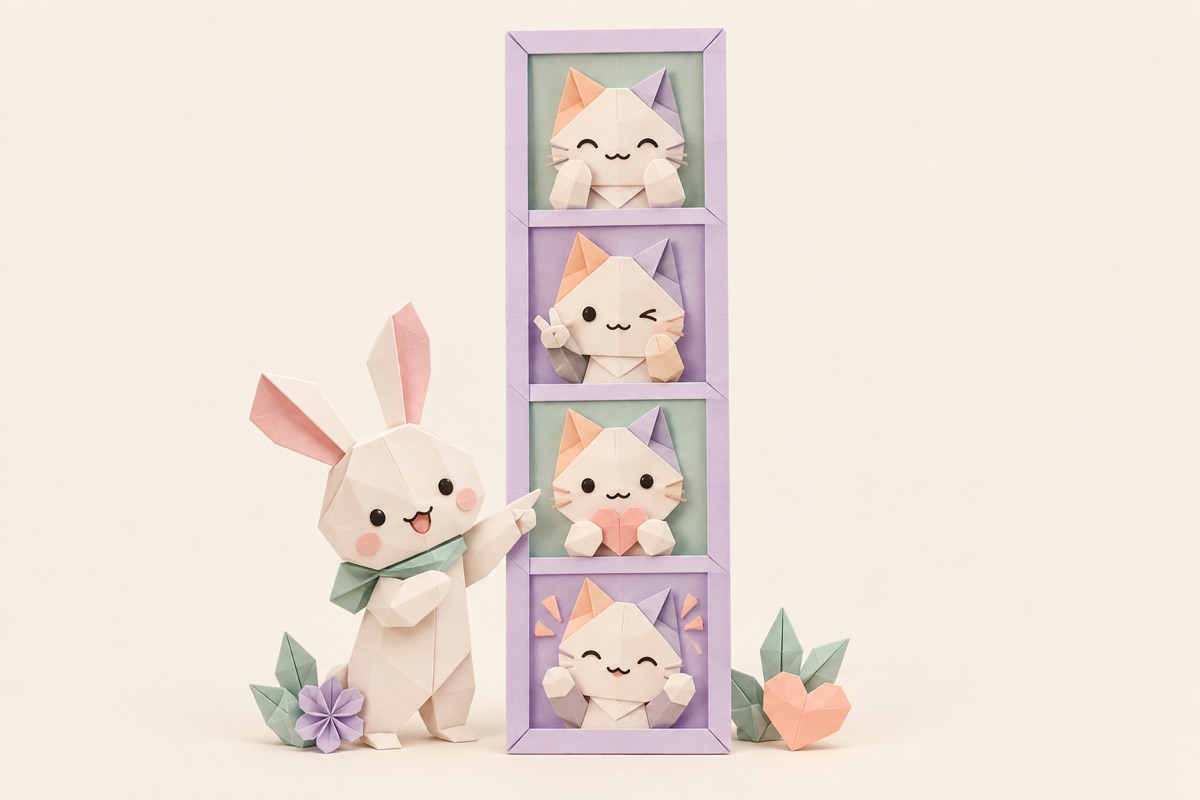
You've seen them. Those skinny little strips of four photos, stacked like a piece of film, sometimes black with neon pink lettering, sometimes pastel and unbearably cute. They're all over TikTok and Instagram right now, tucked into phone cases and taped inside journals. That's Life4Cut, and if you've been wondering what it actually is and why everyone seems to have one, this is the full story: where the trend came from, how it's different from a regular photo booth, and how to shoot one for free without leaving your room.
Quick disclosure before we start: I work at Bondi, the team behind Bondi's online photo booth, so I've played with this trend more than any reasonable person should. That's exactly why I can explain it properly.
What Is Life4Cut?
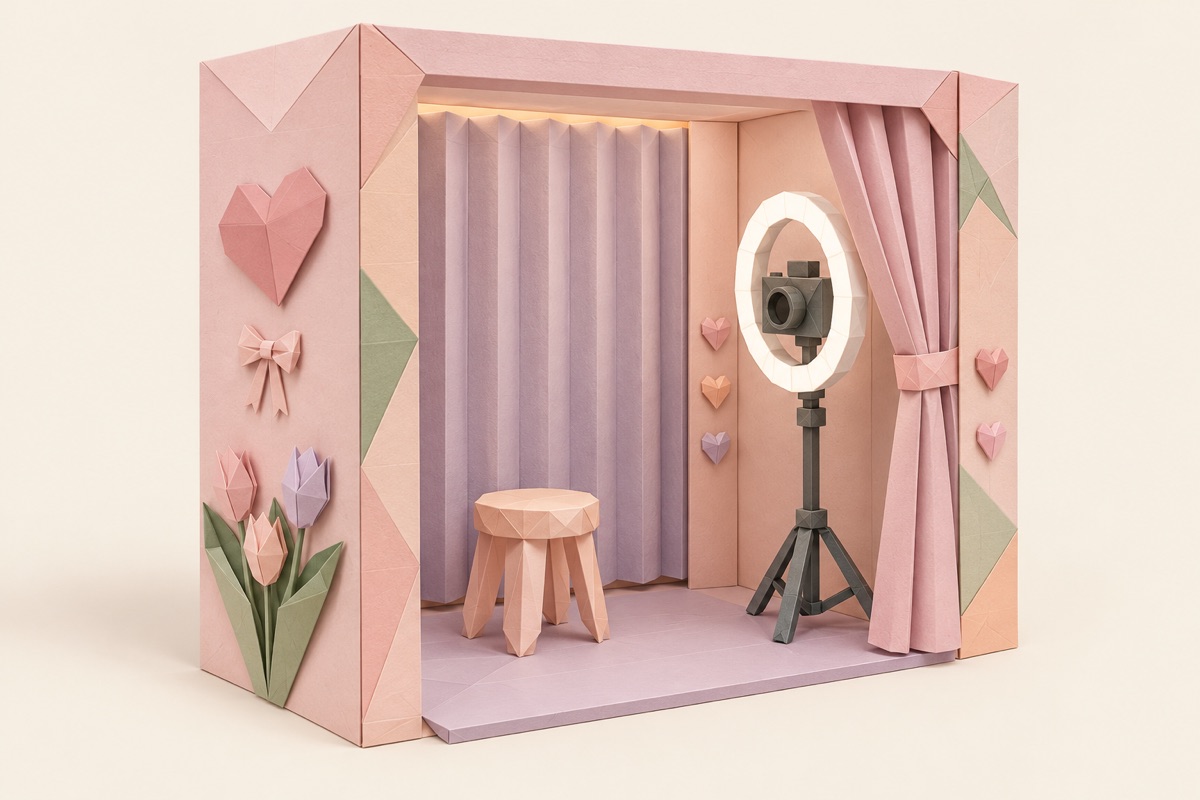
Life4Cut is a photo strip style born in Korean self-photo studios: four shots taken seconds apart, printed as one slim vertical strip. The Korean name is 인생네컷 (in-saeng-ne-cut), which translates to "four cuts of life." You walk into an unmanned booth, press the shutter yourself, and the machine fires off four frames while you scramble to change poses. No photographer. No one telling you to tilt your chin. Just you and your friends against a countdown timer.
Here's the funny part: Life4Cut is technically a brand. It's a chain of self-photo studios in Korea, and it got so popular that the name went generic, the way "Kleenex" means any tissue. Alongside rivals like Photoism, these K-photo booths charge around $3 to $5 per session, and they've spread from Seoul across Asia and into cities worldwide. You'll now find them in Tokyo, Bangkok, Singapore, even LA and London. People also write it as "life 4 cuts" or just call it "4-cut photos." Same thing.
What separates a Life4Cut from your average selfie:
- A vertical strip of four stacked frames, like a cut of film
- Minimal frames with real style, either clean black-and-white or loud concert-poster neon
- Rapid-fire shots a few seconds apart, so you get real expressions instead of one stiff pose
- A physical print small enough to live in your wallet or journal
Why Gen Z Is Obsessed
Honestly? Because it hits everything this generation actually wants from a photo.
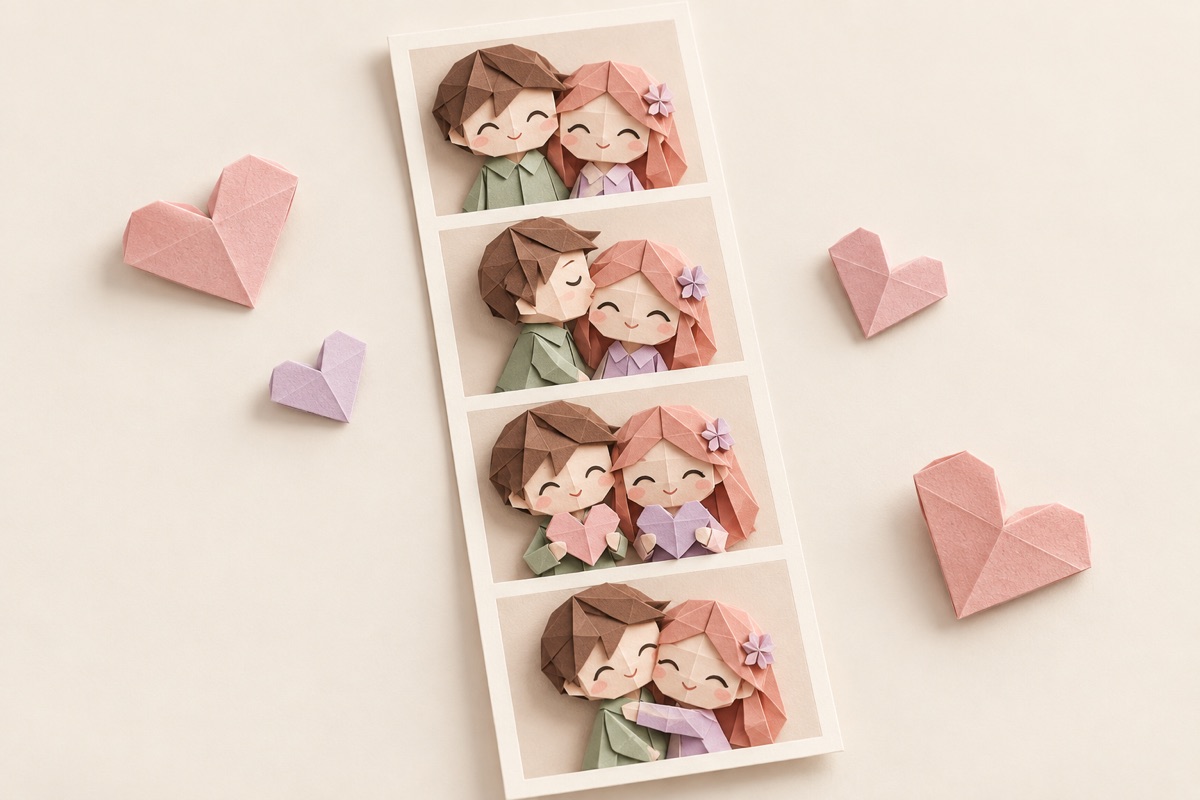
There's no beauty filter sanding your face into someone else's. The tones are clean and natural, and the frame does the styling instead of your skin doing the suffering. Four frames also tell a tiny story in a way one photo can't: frame one serious, frame two mid-laugh, frame three an intentionally terrible face, frame four a hug. You're not posing for a portrait. You're recording thirty seconds of being with someone.
And then there's the object itself. A Life4Cut strip is a keepsake you can hold, which feels rare when every other photo you've taken this year is buried in a camera roll. People tape them to mirrors, clip them to fairy lights, slide them behind clear phone cases. Shoot one with your best friend, one on the day you made things official, one at the reunion nobody thought would happen. Then post it to Instagram Stories anyway, because a keepsake that isn't shared is only doing half its job.
The catch is that studio sessions cost money every single time, and weekend lines can get long. Which is why so many people now shoot the online version instead.
Life4Cut vs a Regular Photo Booth
Life4Cut is a photo booth photo, technically. The difference is the aesthetic, and the aesthetic is the whole point.
A regular photo booth, the kind at a mall or a wedding, is a broad category: grids and strips of every size, props, vintage sepia, cartoon stickers, sometimes filters aggressive enough to erase your nose. Japanese purikura sits at the far end of that spectrum, where editing your eyes to anime proportions is the main event.
Life4Cut goes the opposite way. Four vertical frames, honest skin, clean color, and a frame that looks like it was designed by someone with taste. It's the K-photo booth signature: the photo stays real, the frame carries the style. So yes, every Life4Cut is a photo booth strip, but plenty of photo booth strips would never pass for a Life4Cut.
If you want the clean Korean look, pick a minimal or neon frame. If you want chaos, that's what the other frames are for.
How to Shoot One Free Online
You don't need a booth or a plane ticket to Seoul. Any phone or laptop with a camera and a browser can shoot a four-frame strip in a few minutes, and it costs nothing. Here's the whole process using Bondi's online photo booth:
- Open the booth in your browser. No app to install, no account to make. Allow camera access when your browser asks. Everything is processed on your device, so none of your photos get uploaded anywhere, which matters more than people think.
- Pick your layout and frame. Choose the vertical four-frame strip for the classic Life4Cut silhouette, or the 2x2 grid if you're printing a bigger format. Then pick a frame: neon for concert energy, pastel pink for soft-launch energy, minimal film-strip if you want it understated.
- Shoot on the countdown. Set the timer, get in frame, and let it run. The booth fires four shots in a row with a pause between each so you can switch poses. Didn't like the batch? Shoot it again. That's the luxury a paid booth never gives you.
- Download, share, or print. You get a high-resolution PNG. Post it straight to Instagram Stories or TikTok, or print it at a photo lab or on a home printer. The strip fits a 2x6 inch print and the grid fits a 4x6, both perfect journal sizes.
Tips for Better Strips
- Light wins everything. Face a window during the day or put a lamp in front of you at night. A bright, sharp original is the difference between a print that pops and a print that looks like a security camera still.
- Change your pose every frame. Four identical smiles reads like a passport application. Try smile, terrible face, finger heart, hug. The strip needs rhythm.
- Match the timer to your headcount. Three seconds is plenty for two people. With a full friend group, give yourselves five to ten so nobody's half out of frame.
- Treat the four frames like four beats of one bit. Set up a tiny story: greeting, escalation, chaos, payoff. The best strips look like a comic, not a contact sheet.
That's Life4Cut: a Korean self-photo studio trend that turned four quick shots into the most charming photo format on the internet. Visit a Life4Cuts or Photoism booth if there's one near you, they're genuinely fun. But for everything in between, Bondi's online photo booth gets you the same strip for free, from your couch, with unlimited retakes. Your journal has space. Go fill it.
Try the photo booth right on the web
Frames, papers and studio backdrops - free, no sign-up.